Summary of a Forbes column by Jamil Wyne — "Adaptation Finance Needs Capital — And An Ecosystem" — published on 1 June 2026, in which Ardabelle Capital founder and managing partner Virginie Morgon features prominently.
Climate adaptation is no longer a niche conversation. A new study from the Centre for Impact Investing and Practices, with Temasek and Invesco, surveyed 165 Asian funders managing more than $1 trillion and found that adaptation and resilience now rank as their single top impact theme. Yet adaptation finance still flows at just $26–50 billion a year against needs approaching $310–365 billion annually by 2035 — with less than 11% coming from private capital.
In Forbes, climate investor Jamil Wyne argues that closing this gap is as much a framing problem as a capital problem: too often, a wide range of asset classes, risk profiles and return expectations get bundled into one undifferentiated category. Ardabelle's Virginie Morgon features throughout the piece, making the investment case concrete.
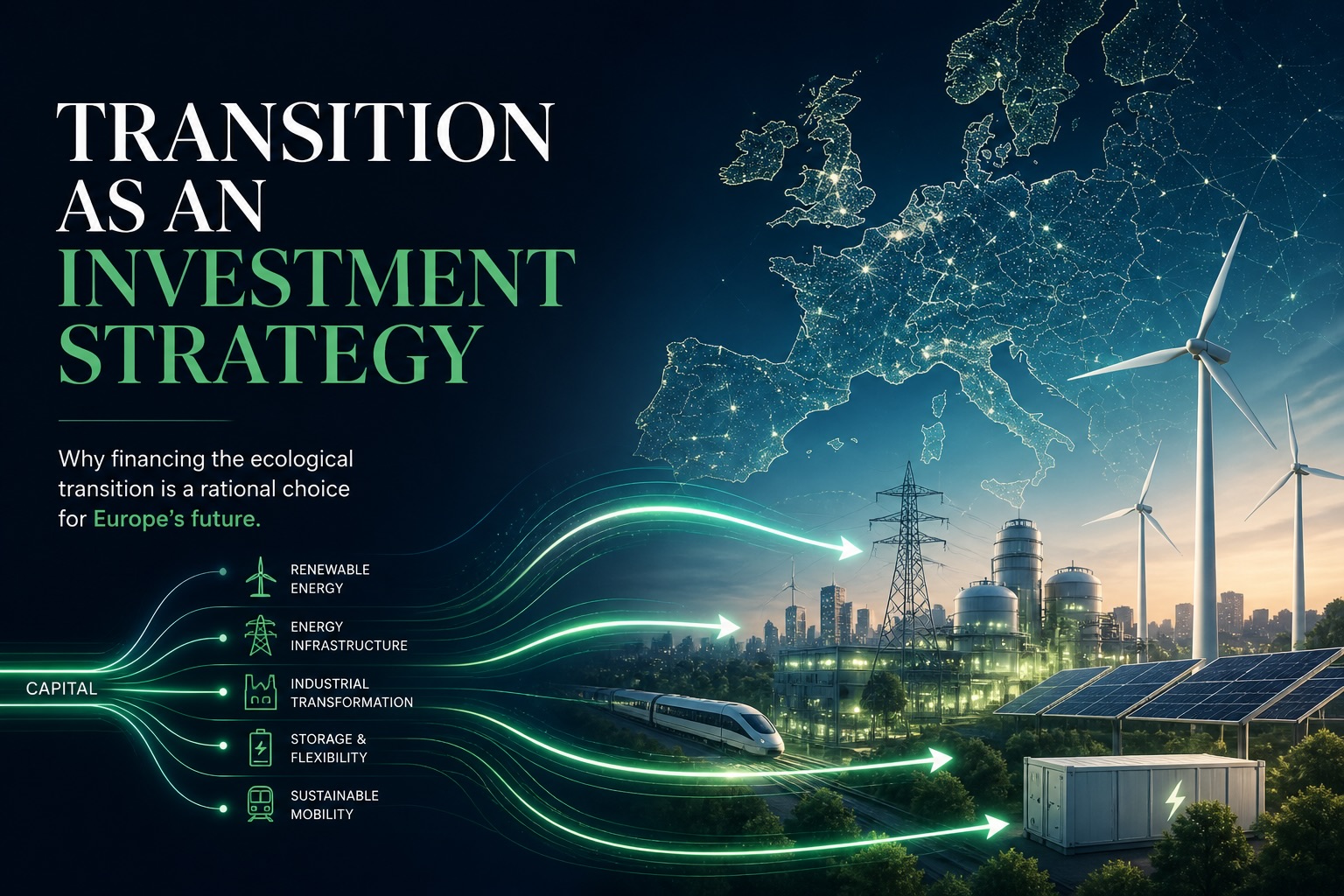
At Ardabelle, we increasingly see resilience, decarbonization and sovereignty as three dimensions of the same industrial transformation.
Key points
- Not all adaptation capital is the same. Different solutions demand different investors, returns and time horizons. As Morgon puts it, some areas are "highly suited to private equity: industrial technologies, water efficiency, waste equipment, resilient agriculture, circular economy platforms, energy efficiency, building renovation ecosystems, or supply chain digitalization," while large-scale protective infrastructure and long-duration public adaptation systems "may require blended finance, infrastructure capital or public-private structures."
- Resilience is a return driver, not a concession. The biggest misconception, Morgon argues, is that adaptation must be low-return or concessionary. In reality, "resilience has increasing economic value because volatility itself has become a major cost driver" — translating into reduced earnings volatility, stronger pricing power, improved supply security, regulatory resilience and more durable cash flows.
- Build the enabling systems, not just the assets. Adaptation still lacks mitigation's universal unit of account (a tonne of CO₂). Without agreed measurement, investors cannot underwrite outcomes — a gap that new investor-relevant impact frameworks are beginning to close.
- Scale is the investment thesis. Project-by-project thinking won't meet trillion-dollar demand. Well-designed adaptation can create a "halo effect" that lifts the value of surrounding assets and communities — but reaching scale means balancing standardisation against genuine local fit.
- Resilience is the underpin, not the headline. The best adaptation investments often don't lead with adaptation at all — just as renewable energy was sold on cost and stability rather than "mitigation." The structure carries the resilience benefit; the conventional value proposition wins the funding.
- Adaptation vs. mitigation is the wrong fight. At the portfolio level, the distinction is fading. A company that reduces energy intensity, localises critical suppliers, builds circular material flows or redesigns products for lower resource dependency is "simultaneously reducing emissions, reducing volatility, and increasing resilience." > The field has made the case that adaptation matters. The harder, more specific case is how it gets funded at scale: with the right instruments, the right returns, the right enabling systems, and real integration with the broader climate finance agenda.
The through-line maps closely to Ardabelle's own thesis: resilience, decarbonisation and sovereignty are not competing agendas but a single industrial transformation — and one that the market is increasingly willing to underwrite.
Virginie Morgon is founder and managing partner of Ardabelle Capital.
Forbes — Adaptation Finance Needs Capital, And An Ecosystem